
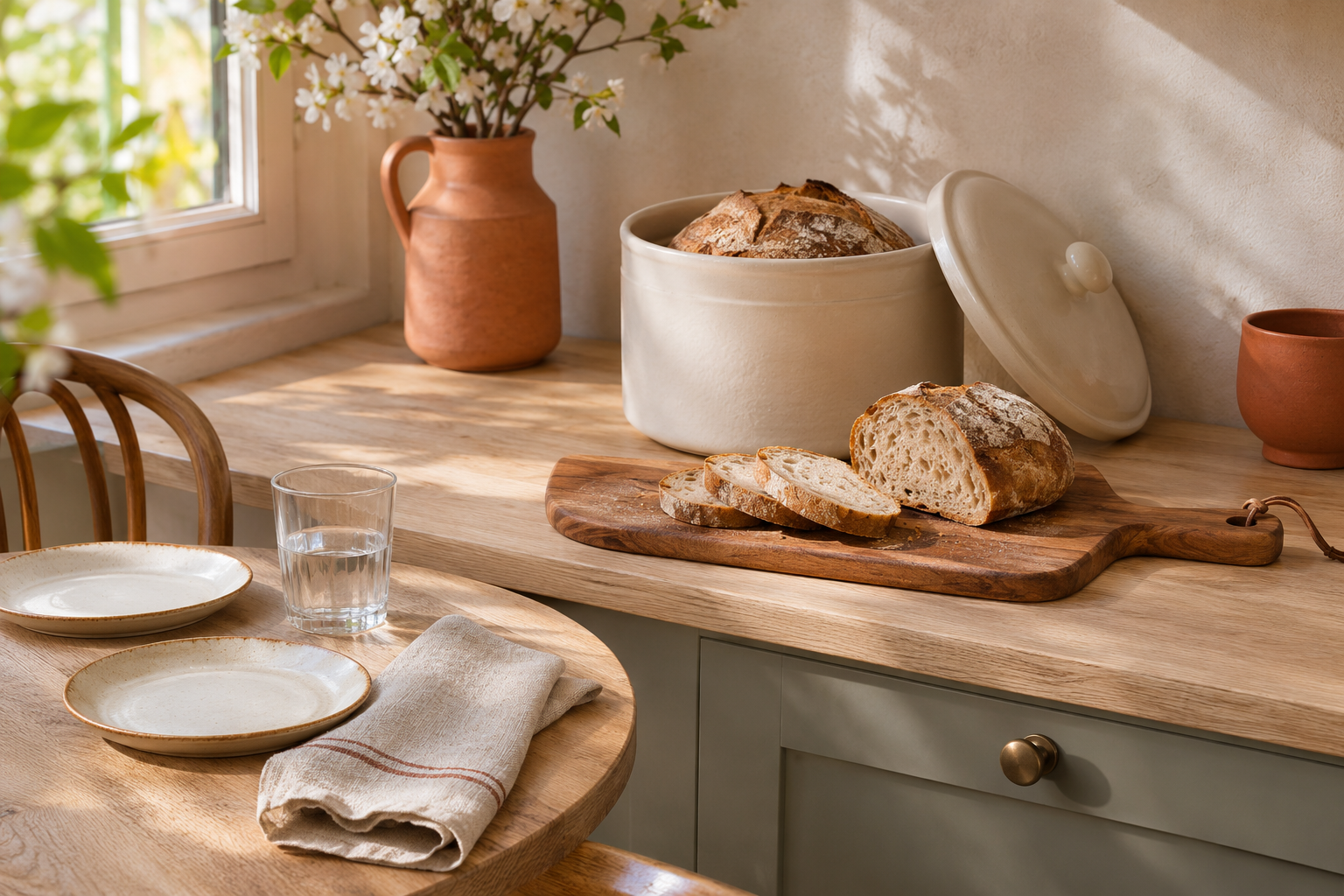
Define the serving job
Write down what the board needs to hold and how people will use it. Passing a compact board, leaving a large board in the center and placing a board on a separate serving surface create different space requirements. Include any bowls, utensils or handles in the plan.
Distinguish serving from preparation. A board marketed for display is not automatically suitable for every cutting task or cleaning method. Check the exact product’s intended use and care instructions before treating it as a general-purpose kitchen tool.
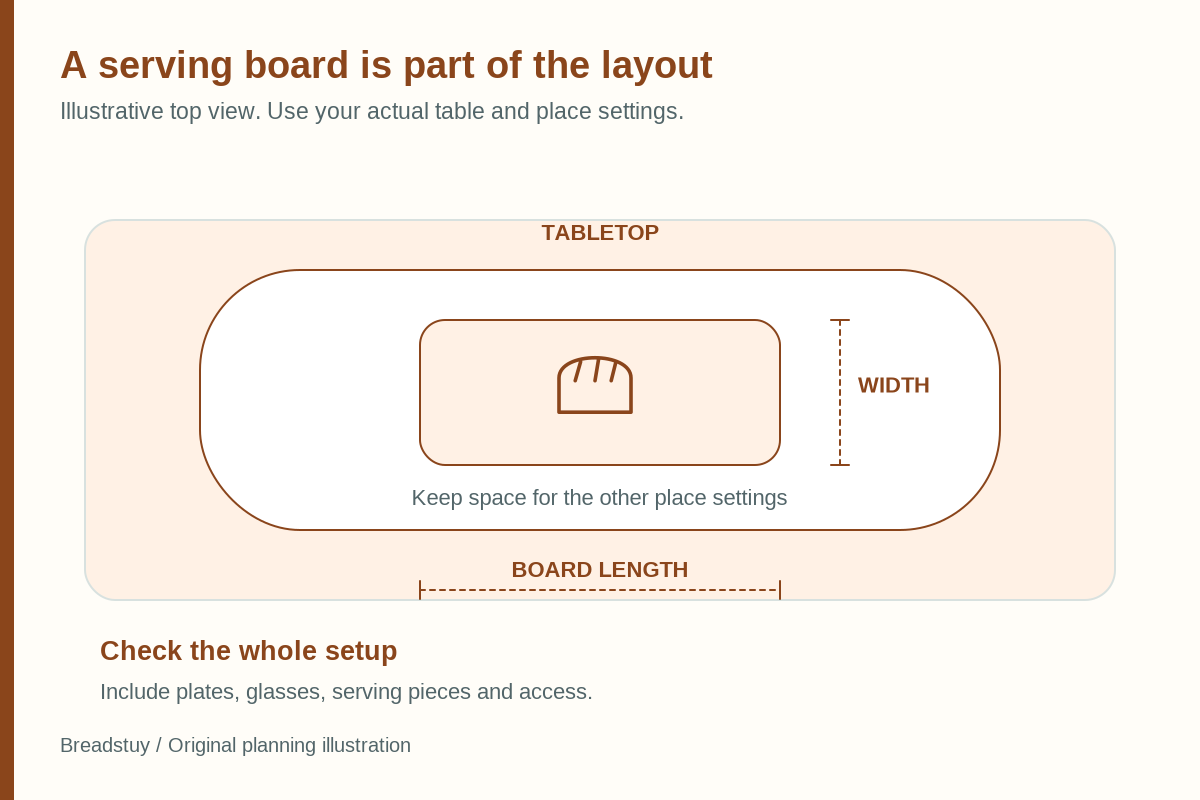
Measure the free rectangle
Set the table with the actual place settings, then measure the space left for the board. Measure width and depth separately. A board with enough total area can still be too wide between the plates, and a handle may extend beyond the advertised serving area.
Illustrative example: a clear strip 70 cm long and 25 cm deep could contain a 60 × 20 cm rectangle geometrically, leaving 10 cm along the length and 5 cm along the depth in total. Those remainders are not per-side clearances or a recommendation that the arrangement will be convenient.
Test a paper version
Cut paper to the candidate’s full outer shape, including handles. Put the empty bowls and utensils you intend to use over the paper. Check where hands would reach and whether the board could be lifted without first removing half the table setting.
Try rotating the footprint or splitting the job between two smaller pieces you already own. Two pieces may be easier to distribute, but they also create two items to carry, clear and store. Choose according to the actual meal rather than a rule that larger is always better.
Check the board’s whole journey
Before buying, measure the intended storage shelf and the space available for cleaning and drying under the product’s instructions. Check weight and grip information if carrying the loaded board is part of the plan. This layout worksheet does not establish a product’s load rating.
Record the smallest size that performs the task successfully in your rehearsal. A useful purchase decision includes the serving layout and the storage plan; otherwise the board may fit the occasion but have no practical home afterward.
Serving-board fit record
| Stage | What to measure or test | Result |
|---|---|---|
| On the table | Free width × depth after place settings | |
| In use | Full shape, bowls, utensils and reach | |
| While carrying | Product information and actual handling needs | |
| Cleaning / drying | Follow exact material-care instructions | |
| In storage | Shelf or cupboard opening and usable space |
Put the plan to work
Use your own information to make a practical next step.
Space-fit calculatorSources and review
This guide is an original planning resource. Its worksheets and examples are organizational aids, not a report of product testing or verified customer results.
An original organizational worksheet and workflow. Examples are illustrative, not reports of customer results.
How these guides are prepared